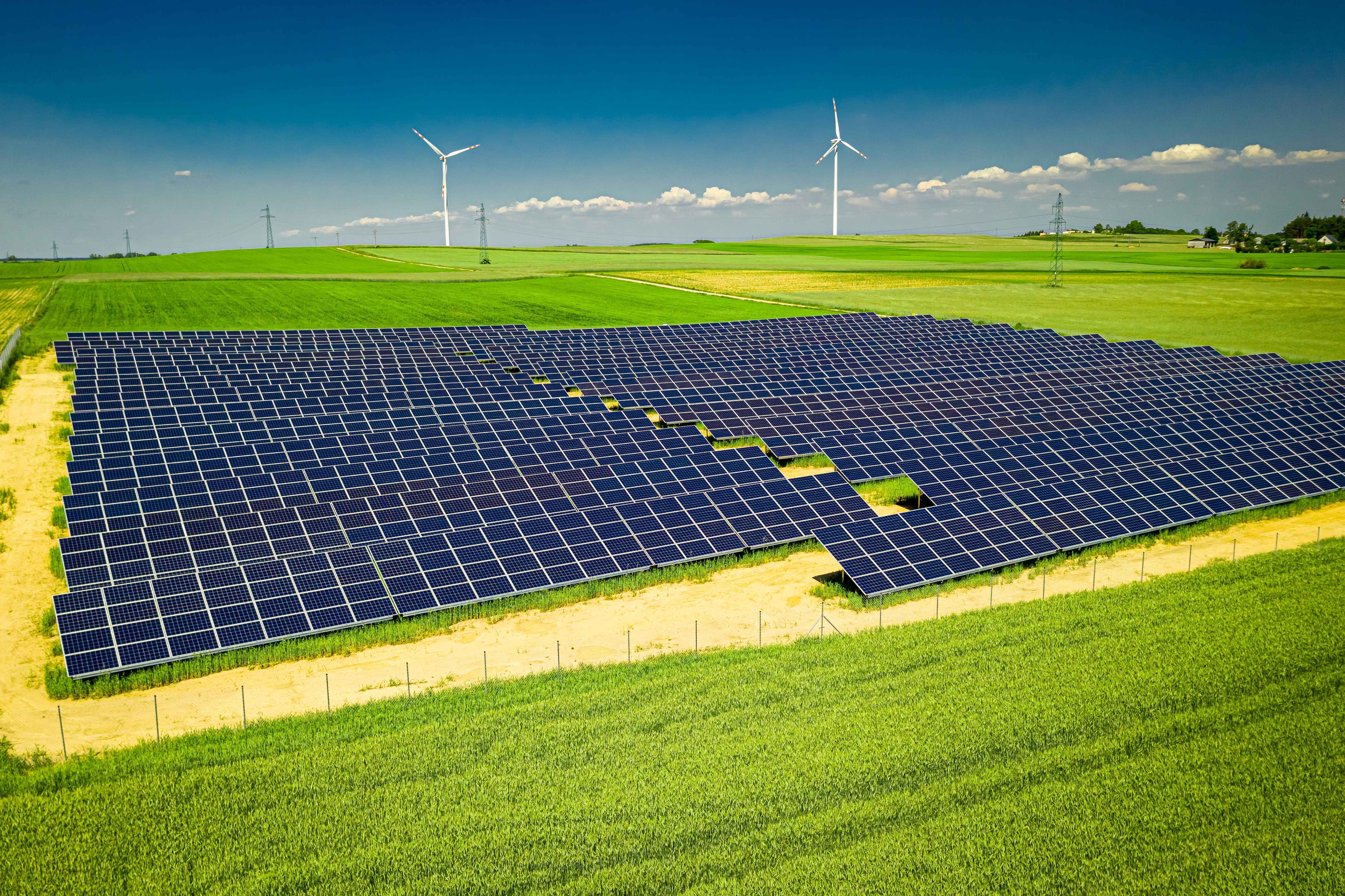
Renewable projects carry risk across their whole life — from heavy lifts during construction, through natural-catastrophe exposure in operation, to the revenue guarantees that underpin their financing. Renewable energy insurance protects each of those phases.
What renewable energy insurance is
Renewable energy insurance is alifecycle programme for solar, wind, hydro and biomass projects— covering the construction and erection phase, the operational phase, and the revenue that the project is financed against.
Solar power project insurance
Solar programmes typically combineerection/construction coverduring the build, anoperational all-riskpolicy for panels, inverters and balance-of-plant,natural-catastrophecover (storm, flood and hail, which can devastate a panel field), andbusiness interruptionfor lost generation revenue.
Wind energy insurance
Wind projects add the complexity ofheavy-lift erectionand highmachinery-breakdownexposure — blades, gearboxes and generators are costly and failure-prone. Cover spans erection, operational property and machinery breakdown, and loss of revenue, with serial-defect accumulation a key underwriting concern.
The key exposures
Natural catastrophe
Hail and storm on solar; cyclone and high wind on turbines.
Machinery breakdown
Gearbox, generator and inverter failure.
Transit
Damage to large components in transport and lifting.
Revenue
Lost generation and contractual performance shortfalls.
Cover across the lifecycle
| Construction phase | Erection All Risk (or CAR) plus Delay in Start-Up. |
| Operational phase | Operating all-risk / property, machinery breakdown, business interruption. |
| Liability | Third-party liability throughout. |
Who needs it
Project developers and independent power producers, EPC contractors, equipment suppliers, and lenders — who almost always require a robust insurance programme as a condition of financing.
How the sum insured is set
During construction, on thefull project cost; in operation, on thereinstatement value of assets plus a business-interruption sumreflecting generation revenue over a realistic indemnity period.
What it does not cover
Typical Exclusions
- •wear and tear and gradual deterioration;
- •serial or known defects (often sub-limited or excluded);
- •performance below specification, unless specifically covered;
- •war, nuclear and, in places, certain grid-failure events.
How Aurevian helps
Aurevian helps youbuild a construction-to-operation programme, manage nat-cat and machinery-breakdown exposures, structure business interruption around generation revenue, and satisfy lenders— with claims support across the project’s life.
“A renewable asset earns for decades — but the risks that threaten it change at every stage of its life.”